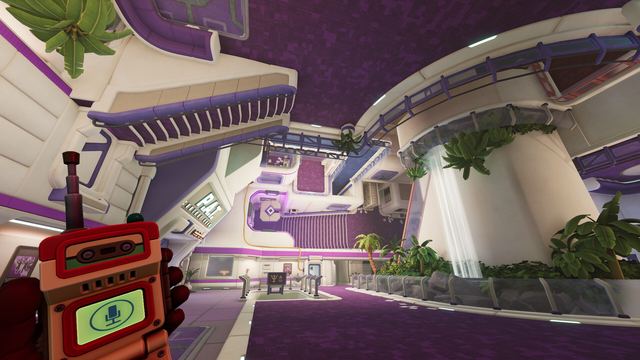
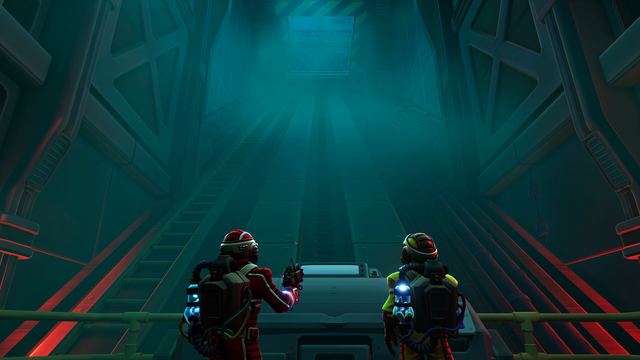
We Were Here Tomorrow beginner guide
Play with a friend who has their own copy and a working microphone, decide who describes and who acts, and treat every puzzle as two half-pictures: your job is to say what you see out loud, in detail, before you touch anything.
We Were Here Tomorrow does not teach you to communicate. It assumes you already can, then builds rooms that punish you for not doing it precisely. Everything in this guide is about the half hour before you press Start, because that half hour decides whether your first two-hour session ends in Sector 2 or in an argument.
What you actually need
Two things are hard requirements and one is a habit.
- Two copies of the game on two machines. There is no friend pass, no couch co-op and no split-screen. The Steam page lists online co-op, cross-platform multiplayer and a microphone as the price of entry.
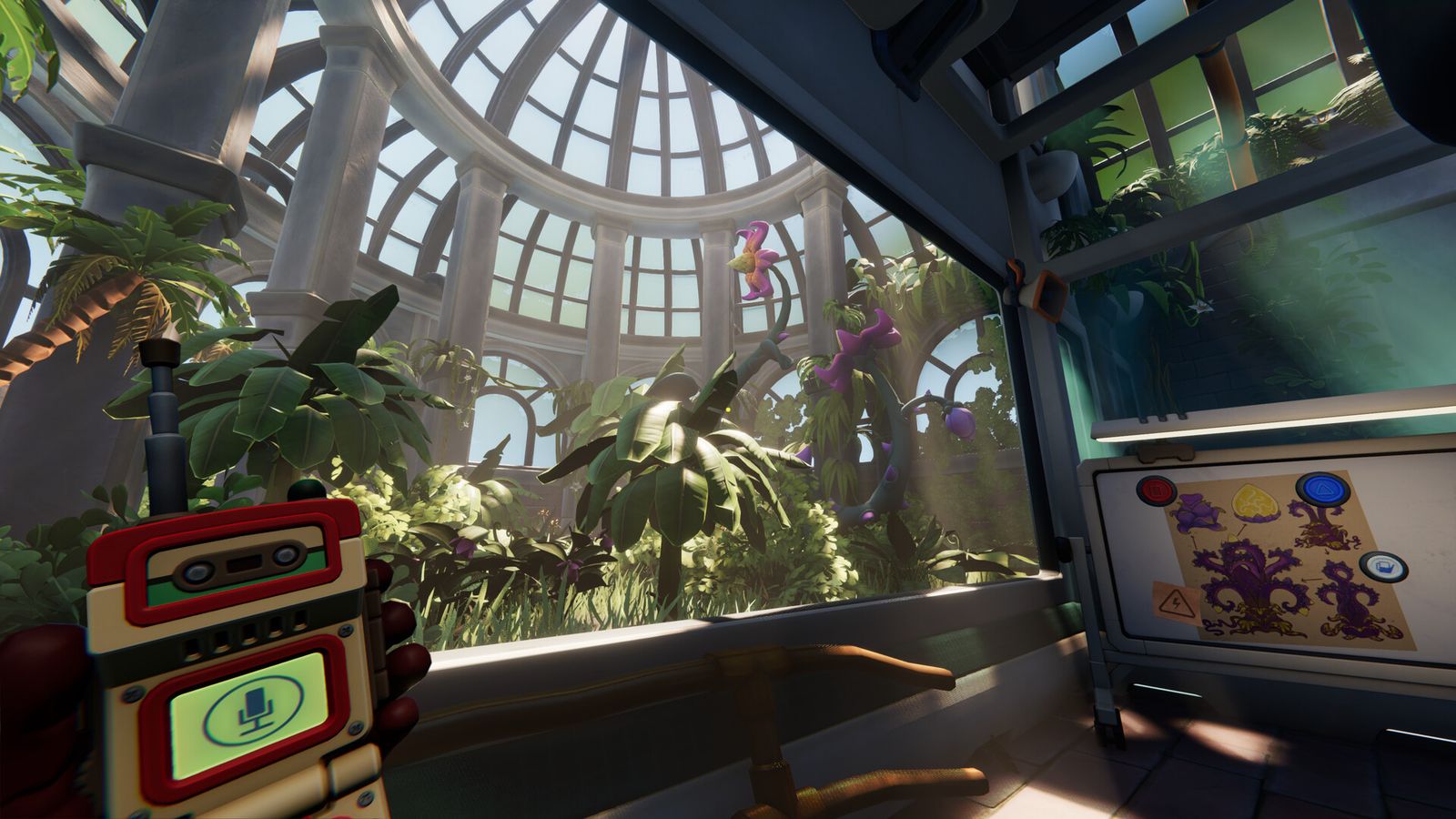
- One working microphone per player. The walkie-talkie is a device in the fiction and a mechanic in practice. If one of you is typing, you are playing a slower, worse game.
- A description habit. Whoever can see a panel describes the panel. Not the puzzle, not the theory, the panel.
Everything else is comfort: a controller if you prefer one, a fixed window of time, and a second screen you agree not to touch until you have both given up.
Settings worth changing before you start
The demo period left a useful paper trail. Patch 0.9.1 added a DX11 Safe mode launch option for AMD crashes, turned VSync off by default and added shader prewarm collections to kill traversal stutter — so if your first ten minutes stutter, that is shader compilation, not a broken install.
Audio matters more than frame rate: set voice so your partner sits above the facility ambience but below the walkie-talkie cues, and test it in the first room.
The five habits that prevent most stalls
1. Describe, do not deduce. "There is a dial with six symbols, the first is a triangle inside a circle, the third is two bars" beats "I think it's the third one". Your partner has the other half of the information; they cannot use a conclusion they did not reach themselves.
2. Name positions, not colours. Colours differ per player view and per room lighting. "Left of the door, waist height" survives translation. "The red one" does not.
3. Say what changed. Every mechanism in this game gives feedback: a light changes, a hum stops, a door moves. Report the change before you report your idea about it.
4. Swap the describer, not the puzzle. If ten minutes pass with no progress, the person who has been talking should go quiet and the other one should take over the description. Half of all stalls are one player describing the wrong thing confidently.
5. One person operates, one person reads. Two people touching two consoles at once is how co-op pairs desynchronise a step and then spend ten minutes arguing about which order things happened in.
How a sector is shaped
Every sector follows the same rhythm, and knowing it removes most of the panic:
- Briefing. The Director frames a task. Listen for the noun — a room name, a device, a card, a fuse.
- Separation. You are split up, often without warning. This is normal and is not a soft-lock.
- The two-view puzzle. Each of you reads half of a system; the solution only exists in the overlap.
- A physical step. Something gets carried, powered, printed, cut or welded — this is where the tool you carry matters.
- A checkpoint achievement. Steam tells you that you finished the segment. That is your signal to stop solving and start walking.
| Checkpoint | What it means | Global completion |
|---|---|---|
| The World of Tomorrow | You woke up in the facility | 100% |
| Corporate Exercise | You passed the Wellness Check | 100% |
| Smooth Moves | You performed a crouch slide | 90.7% |
| Micromanagement | You created a new access card | 88.6% |
Those four numbers are the honest shape of a first session: everyone wakes up, nearly everyone gets through the Wellness Check, and roughly one player in ten never learns the crouch slide before Sector 3.
What "stuck" usually is
In order of frequency: one player is describing a symbol they can see from the wrong side, the pair skipped a physical step that was waiting behind them, one player is holding a tool they have not been told how to fire, or the two of you are solving different puzzles in adjacent rooms because a walkie-talkie instruction sent someone the wrong way.
The puzzle mechanics page has the five-step rescue that resolves all four. Run it before you open a video, because a video cannot see your symbols.
Once your setup is done and the habits are in place, go to the walkthrough hub and start Sector 1 with the Norček Facility page.